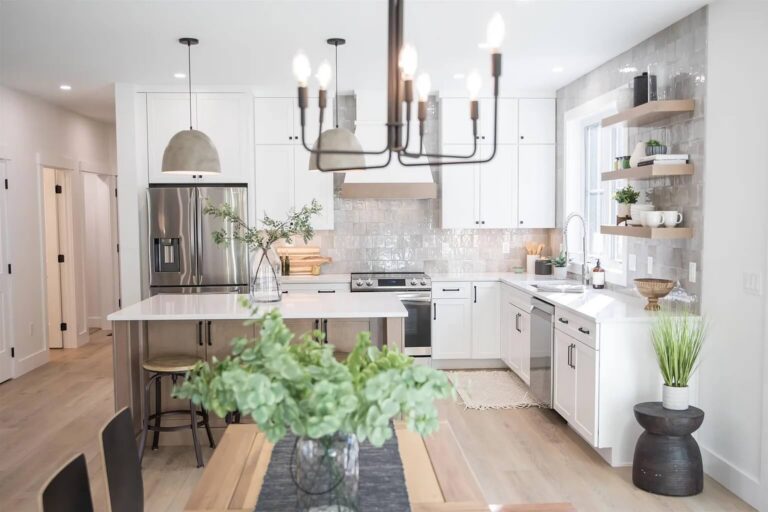
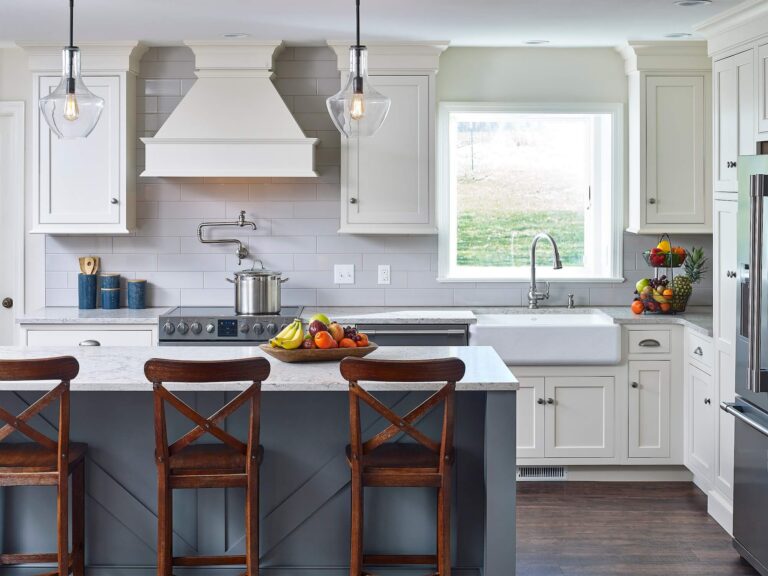
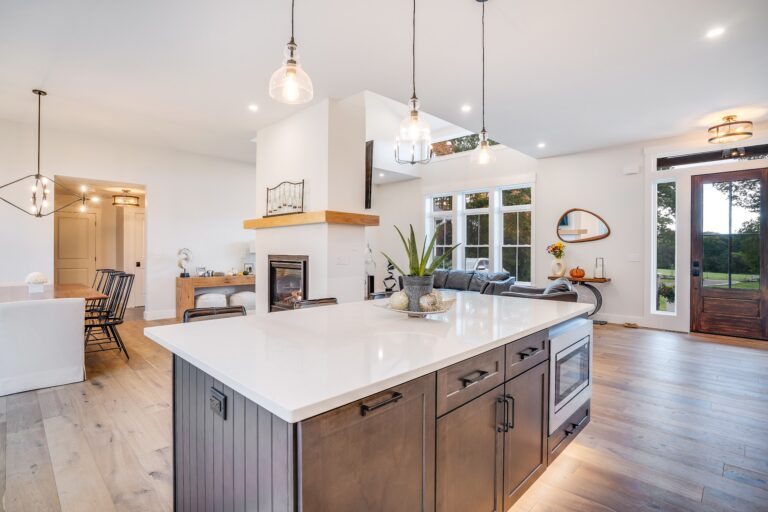
If you’re wondering how to arrange kitchen cabinets effectively, the short answer is this: group similar items together, store what you use most often within easy reach, and create designated zones for prep, cooking, cleaning, and storage.
Focus on accessibility—easy access to everyday dishes, cooking utensils, and small appliances will make daily kitchen use smoother. Items like cleaning supplies belong under the kitchen sink, while a lazy susan can make the most of tricky corner cabinets. Use top drawers for flatware and bottom drawers for bulkier or seasonal items. Planning your storage space around how you actually use your kitchen can help reduce clutter, save time, and make the space feel more efficient.
Step 1: Start with a Plan
Before you put a single plate back in your kitchen cabinet, the first step is to plan. Whether you’re working with a professional organizer or doing it yourself, starting with a clear strategy makes everything easier.
Begin by emptying all your upper cabinets, lower cabinets, and kitchen drawers. This gives you a clean slate to work from and helps you see what you actually have. Sort everything into categories: everyday dishes, cooking essentials, food storage containers, cleaning supplies, small appliances, and so on. This is also the time to declutter—get rid of duplicate vegetable peelers, lidless storage containers, and expired pantry items.
Create zones based on how you move through your kitchen on a daily basis. One zone for prep and cooking, one for cleaning, one for serving, and one for storage. This way, each cabinet, drawer, and shelf has a purpose, and you’re not searching three different places for your measuring cups.
Using clear containers, drawer dividers, and a quality drawer organizer will help you stay organized long-term. This upfront work saves time and frustration later.
Step 2: Set Up Functional Kitchen Zones
Arranging your kitchen cabinets and drawers by zones isn’t just for looks—it improves efficiency and reduces stress.
Cooking and Prep Zone
This area should include your stove, prep counter, and nearby storage. Place cooking essentials in a top drawer or mounted rail. Keep your spice drawer or spice rack close by, and use dividers to separate flavors or cuisines if needed. Your knife block, vegetable peeler, and measuring cups also belong in this area for quick use.
Cleaning Zone
The area around the kitchen sink should include cleaning supplies, dish towels, and extra sponges or garbage bags. A bottom cabinet under the sink works well for this, but make sure it’s organized with bins to avoid mess.
Storage Zone
Your storage zone includes your food storage containers, pantry staples, and dry goods. Use clear containers to make it easy to see what you have. Stackable options make the most of your cabinet shelves or lower cabinet space. Reserve one drawer or cabinet specifically for storage containers so lids and bottoms don’t end up scattered.
Appliance Zone
Larger kitchen appliances can overwhelm your space if not given a designated spot. Dedicate a bottom cabinet or pantry section for small appliances like the food processor, blender, or toaster. Store them near where they’ll be used most.
Entertaining Zone
If you entertain often, it helps to have wine glasses, serveware, and extra coffee mugs near the dining room. Use a dedicated upper cabinet for these, and consider adding open shelving if space allows.
Step 3: Organize Cabinets and Drawers by Function
Upper Cabinets
Your upper cabinets are prime real estate for frequently used items. Keep everyday dishes like plates and bowls here, near the kitchen sink or dishwasher for easy loading and unloading. Use the cabinet shelves efficiently by installing risers or adjustable shelves so you don’t waste vertical storage space.
Designate one cabinet for drinkware. Keep coffee mugs near your coffee station and wine glasses near the dining room or wherever you entertain. If you’re tight on space, use under-cabinet racks for hanging stemware or hooks for mugs.
Lower Cabinets and Bottom Cabinets
Lower cabinets and bottom cabinets should hold heavier items and those not used every day. Place your small appliances, like the food processor, mixer, or toaster oven, in lower spots. Store cookie sheets and baking pans vertically using dividers, ideally next to the oven for convenience.
Tip: Use the corner cabinets for bulk storage and install a lazy susan to make use of the space. Store large serving bowls, seasonal cookware, or even backup food storage here.
Drawers
Your drawers should be arranged for function and flow. The top drawer closest to your cooking area should be your silverware drawer. Another top drawer should house cooking utensils, like spatulas, tongs, and ladles. A third might contain measuring tools, peelers, and other smaller items you use often.
Mid-level drawers can house dish towels, oven mitts, and prep tools. The bottom drawer is ideal for a tupperware drawer, baking tools like cookie cutters, or lesser-used kitchen items. Always use a drawer organizer to separate categories.
Remember to label where needed and stick to storing similar items together. This keeps your kitchen intuitive and user-friendly.
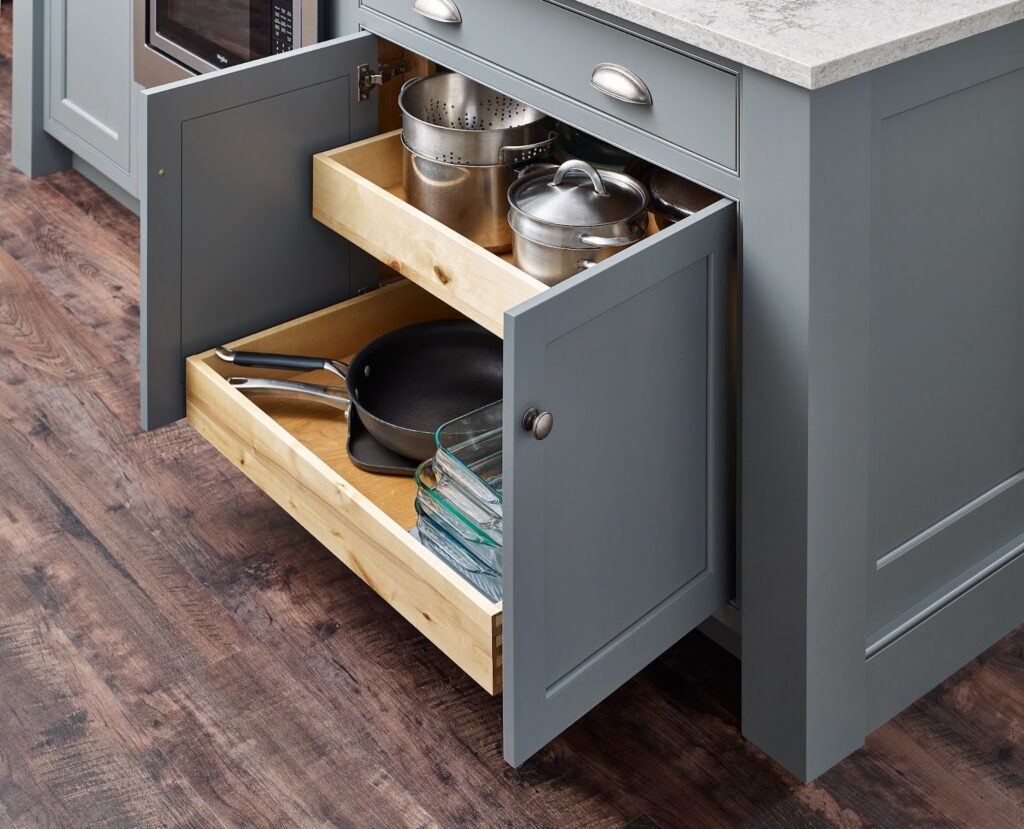
Step 4: Avoid Common Mistakes in Kitchen Cabinet Organization
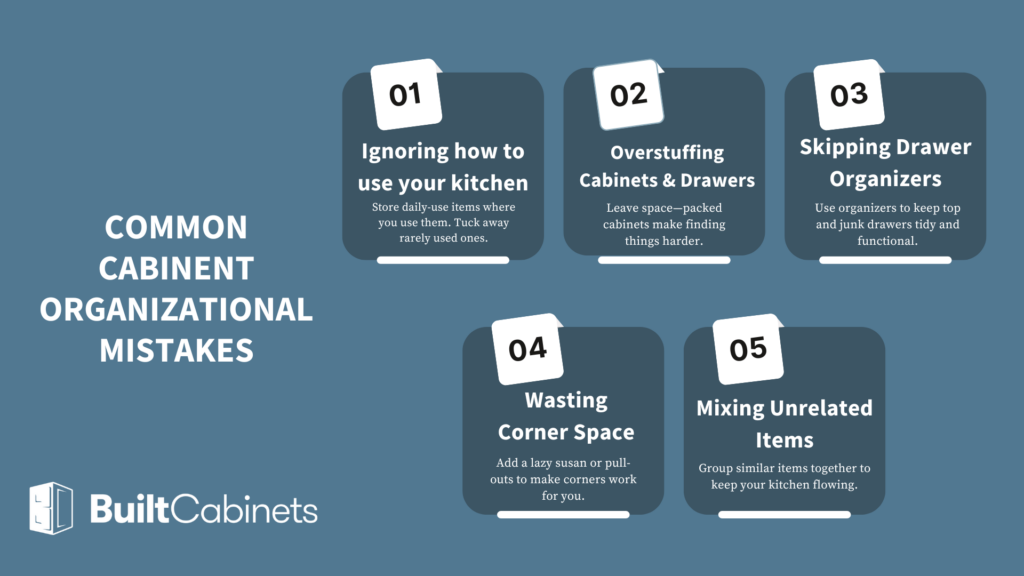
Too often, homeowners rush into organizing their kitchen without thinking through their daily habits. Here are a few missteps to avoid:
Mistake #1: Ignoring How You Use Your Kitchen
Don’t store the blender across the kitchen if you use it every morning. Organize based on frequency and daily basis use. Items used once a year? Store those in harder-to-reach spots.
Mistake #2: Overfilling Cabinets and Drawers
Cramming too much into each cabinet or drawer makes it hard to find what you need. Leave some breathing room in your storage space for flexibility.
Mistake #3: Not Using Drawer Organizers
A drawer organizer is a small investment with a big payoff. Use them in every top drawer, tupperware drawer, or junk drawer to keep everything in place.
Mistake #4: Forgetting the Corners
Corner cabinets are often underutilized. Install a lazy susan or pull-out shelves to avoid wasted storage space.
Mistake #5: Not Grouping Similar Items
Storing cookie cutters with your spice jars doesn’t make sense. Keep similar items together so the kitchen flows better.
Avoiding these pitfalls helps you maintain an organized kitchen that works for you, not against you.
Why High-Quality Cabinets Make a Big Difference
At the end of the day, even the best organizing strategy won’t work well if your kitchen cabinets aren’t built to support it. Wobbly drawer tracks, poorly spaced cabinet shelves, and hard-to-access bottom cabinets only add frustration.
This is where working with a company like Built Cabinets makes a difference. We specialize in providing USA-made, factory-direct cabinets that are pre-assembled and ready for installation. That means no showroom markups, no long delays, and no guesswork.
Our cabinets are designed with real-life use in mind:
- Smart Storage Features: Designed to maximize every inch of storage space, including specialized options for spice drawers, tupperware drawers, and more
- High-Quality Materials: Constructed using durable plywood and solid wood for longevity.
- Customization Options: Semi-custom designs allow you to tailor cabinets to your specific needs and preferences.
- Fully Assembled Drawers and Shelves: Built for durability and ease-of-use
- Efficient Ordering and Delivery: With our process, you get what you need, when you need it, without the showroom wait
We understand that your kitchen needs to work for your lifestyle. Whether you’re a seasoned home chef or someone just trying to get out the door each morning, our products are made to support your daily routine.
An organized kitchen isn’t just about looks—it’s about how your home functions. And that starts with the right cabinets.
Ready to make your kitchen work for you? Contact us today to learn more or request a consultation. We’re here to help you get organized the right way—with quality, efficiency, and support from start to finish.